
.svg)
Prylada warehouse safety and collision monitoring system
Impact detection and rack stability monitoring using tilt and vibration data, ensuring full visibility into structural risks and preventing cargo losses.
Warehouses are constantly exposed to hidden risks: forklift impacts, structural vibrations, or improperly installed racks can lead to deformation, instability, and cargo falls. Prylada solution provides continuous IoT-based monitoring of rack condition and pallet stability, detecting impacts, vibrations, and tilt in real-time, and enabling fast response before issues escalate.
Request technical assessment
From risk to real-time control

How the Prylada solution works
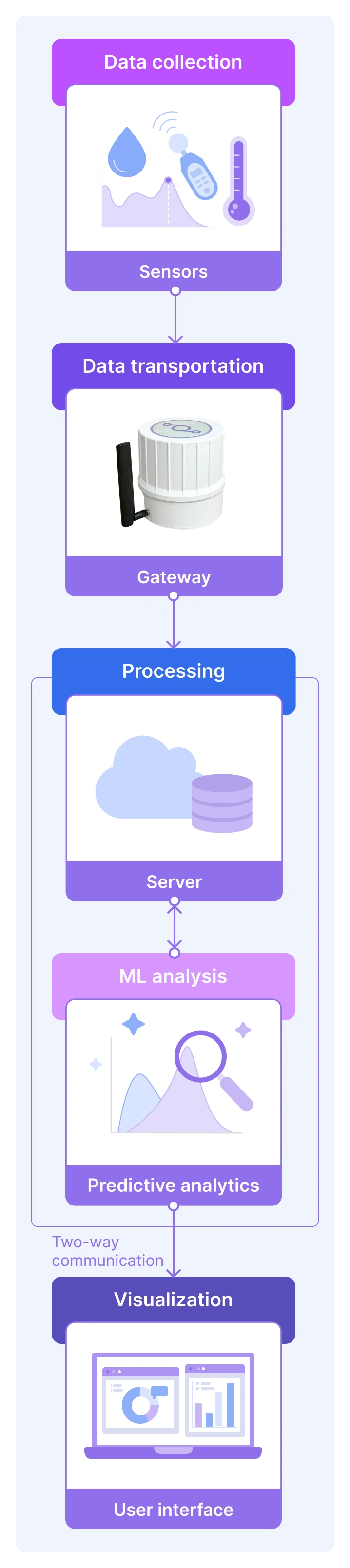
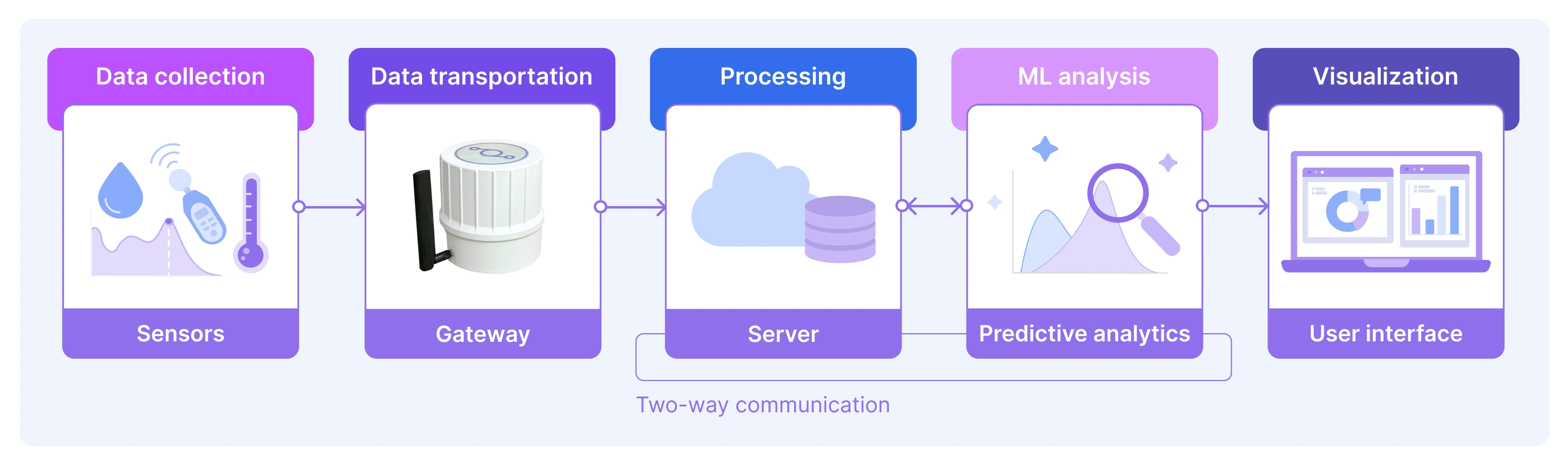

.svg)


Need to improve warehouse operations? Complete the form, and we’ll recommend a solution for you.

Why is warehouse shelf monitoring important?
Lack of visibility of collisions and damage leads to:


IoT Monitoring allows you to detect problems at an early stage and take action before a failure occurs
Use cases and applications
Prylada enables full visibility into warehouse events and structural conditions, helping operations and safety teams detect incidents, assess risks, and make data-driven decisions. Practical applications our solution supports:
Detect and log every impact between forklifts and rack structures, with precise data on time, location, and intensity. Ensures that all rack-related incidents are captured and traceable
Track rack tilt and structural changes after a collision to assess potential damage. Helps teams decide whether inspection or maintenance is required.
Monitor shocks and vibrations affecting sensitive or high-value goods during storage. Reduces the risk of hidden damage and supports quality control.
Analyze historical data to identify areas with recurring impacts or excessive vibration. Enables optimization of warehouse layout and operations.
Maintain a complete record of rack-related events (impacts, tilt, vibration) to support incident analysis, audits, and insurance claims. Provides objective data to verify what happened, when, and where.
Business value and impact
Prylada provides continuous monitoring of rack condition, impacts, and structural activity across the warehouse. Gain instant awareness of incidents and eliminate operational blind spots.
Prylada detects impacts and structural anomalies the moment they occur. Reduce response time from days to seconds and improve workplace safety.
Prylada records impacts and structural events with accurate timestamps and historical logs. Improve accountability and support faster incident investigations
Prylada uses sensor data to assess rack deformation and structural condition automatically. Reduce human error and improve confidence in operational decisions.
Prylada enables predictive maintenance based on real structural conditions.Lower maintenance expenses and prevent costly failures.
Prylada creates digital evidence of impacts and structural events.Support insurance claims and reduce liability-related losses.
Prylada supports subscription-based monitoring and maintenance models.Create long-term customer engagement and predictable recurring revenue.
Prylada automatically generates digital inspection records and event history.
Reduce administrative workload and improve audit readiness.
Prylada acts as a digital event logbook with continuous historical documentation.Strengthen legal protection and support compliance verification.
Prylada continuously monitors rack safety conditions and alerts operators to critical risks.
Support safer warehouse operations and proactive compliance management.
What differentiates Prylada

Multi-parameter monitoring (shock + vibration + tilt)

Real-time detection + historical analytics

Industrial-grade hardware
Scalable architecture (zone-based deployment)
.svg)
Enterprise-ready integrations


.svg)
.svg)
.svg)
