
.svg)
Prylada Ice Detection Point — Monitorowanie gołoledzi na drogach
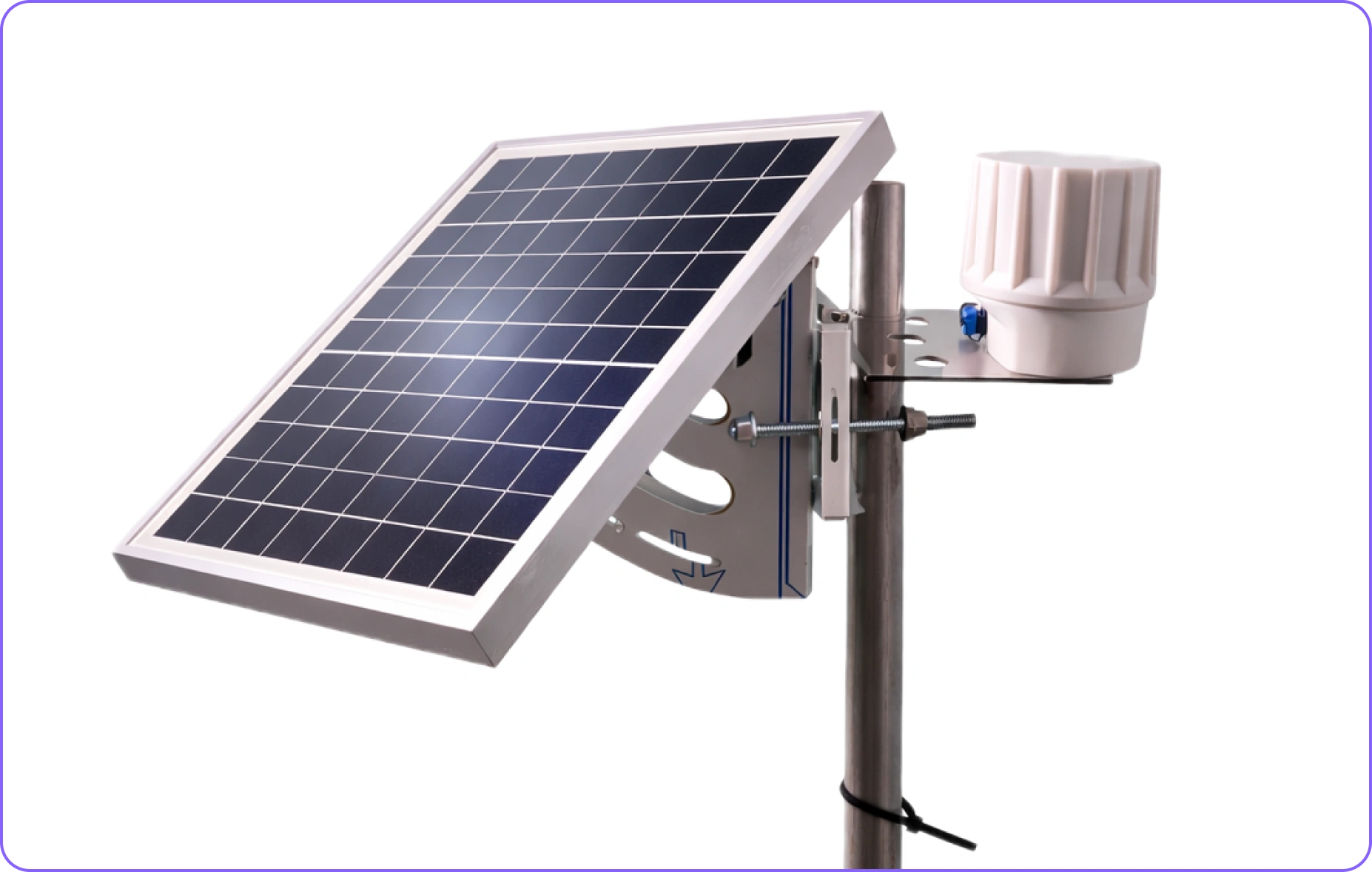
Prylada Ice Detection Point to autonomiczna instalacja przeznaczona do ciągłego monitorowania warunków nawierzchni drogi i wczesnego wykrywania ryzyka oblodzenia. System gromadzi, przetwarza i przesyła dane w czasie rzeczywistym w celu wspierania podejmowania decyzji operacyjnych dla operatorów dróg i usług konserwacji zimowej.
Dostępne jako usługa Hardware-as-a Serice (HaaS)
Aby rozpocząć korzystanie, wystarczy wybrać konfigurację urządzenia (z panelem solarnym lub bez), określić czas trwania umowy i opłacać stałą miesięczną opłatę — bez konieczności początkowej inwestycji w sprzęt.


Zobacz pulpit demo na żywo
Pulpit nawigacyjny Ice Detection Point zapewnia widoczność w czasie rzeczywistym warunków nawierzchni drogi. Interfejs wyświetla aktualne parametry środowiskowe, stan aktywacji reguły i aktywne alarmy, umożliwiając operatorom szybką ocenę ryzyka oblodzenia i reagowanie na warunki niebezpieczne
Wizualizacja danych i wdrażanie systemu
Pulpit nawigacyjny wizualizuje wszystkie zebrane dane i może być wdrażany w chmurze Prylada Cloud, chmurze prywatnej lub na serwerze lokalnym. Monitorowanie w czasie rzeczywistym, analiza historyczna, śledzenie alarmów i dostęp do interfejsu API dla bezproblemowej integracji z istniejącymi systemami. Ten sam pulpit nawigacyjny, który widzisz w wersji demonstracyjnej, jest dostępny w ramach subskrypcji Hardware as a Service. Po wdrożeniu punktu wykrywania lodu dane są natychmiast dostępne na pulpitach nawigacyjnych. Nie wymaga dodatkowej konfiguracji.
Kluczowe elementy Prylada Ice Detection Point
Prylada Ice Detection Point to system złożony, który integruje wiele czujników, bramę IoT oraz autonomiczne źródło zasilania w jednym punkcie monitorującym. Urządzenie wykonuje zbieranie danych na miejscu oraz wstępne przetwarzanie, zanim bezpiecznie przekaże dane do centralnej platformy analitycznej.
Prylada Ice Detection Point jest wyposażony w następujące czujniki i komponenty:

Monitoruje temperaturę otoczenia w celu identyfikacji warunków zamarzania wpływających na nawierzchnię drogi.

Śledzi poziom wilgoci w pobliżu nawierzchni drogi w celu dokładnej oceny ryzyka lodu.

Mierzy temperaturę nawierzchni drogowej w celu wykrycia warunków krytycznych dla powstania lodu.

Zapewnia niezawodną i nieprzerwaną pracę wszystkich czujników.

Precyzyjny, bezkontaktowy impulsowy koherentny radar (PCR) służy do pomiaru odległości powierzchni i wykrywania obecności wody, warstw lodu lub zmiany stanu nawierzchni.

Zapewnia zrównoważoną, długotrwałą autonomiczną pracę w odległych lub przydrożnych lokalizacjach
Prylada Ice Detection Point jest dostarczany jako gotowa do wdrożenia jednostka i dostępny w modelu Hardware as a Service (HaaS), który pozwala klientom wybrać konfigurację urządzenia oraz czas trwania umowy przy stałych kosztach miesięcznych.
Prylada NB-IoT Gateway jest podstawowym modułem komunikacyjnym Prylada Ice Detection Point.
Zapewnia niezawodną łączność o niskim poborze mocy z dowolnej lokalizacji do platformy analitycznej, wykorzystując sieci NB-IoT i LTE-M. Konstrukcja zapewnia ciągłą pracę bez stałej konserwacji, bezpieczną transmisję danych, minimalne zużycie energii i odporność na warunki atmosferyczne.
System został zaprojektowany z myślą o środowiskach, w których monitorowanie warunków drogowych ma największe znaczenie.


Zapytaj o specyfikację Gateway
Podaj swój adres e-mail, a skontaktujemy się z Tobą i przekażemy wszystkie niezbędne informacje.
Model zamawiania i wdrażania
Prylada Ice Detection Point można wdrożyć przy użyciu elastycznego modelu Hardware as a Service (HaaS). Takie podejście pozwala rozpocząć monitorowanie warunków nawierzchni drogi bez koniecznosci kupowania sprzętu.
Jak działa system
- Panel solarny
- Zasilanie od sieci 230V
- Pilot krótkoterminowy
- Długoterminowe wdrożenie
Obejmuje sprzęt, łączność i dostęp do platformy
Model HaaS skraca czas wdrażania, upraszcza budżetowanie i umożliwia szybkie skalowanie punktów monitorowania czarnego lodu w całej sieci drogowej.

Przetwarzanie danych i analiza z wykorzystaniem ML
Kluczowym elementem roawiązania Prylada Ice Detection Point jest przetwarzanie danych oprte na uczeniu maszynowym. Strumienie danych z czujników są analizowane przy użyciu modeli ML wytrenowanych danych dotyczących warunków nawierzni drogowej w celu:
• Korelowania temperatury powietrza, temperaturę powierzchni, wilgotności oraz pomiarów radarowych
• Wykrywania subtelnych wzorców wskazujących na wczesny etap powstawania lodu
• Ograniczania fałszywych alarmów spowodowanych krótkotrwałymi lub odosobnionymi przekroczeniami progów
• ciągłego poprawiania dokładnośći wykrywania na podstawie danych historycznych.
Przetwarzanie z wykorzystaniem uczenia maszynowego jest stosowane jako część procesu analizy danych, co umożliwia uzyskiwanie prognozowanych wniosków oraz bardziej wiarygodnych ostrzeżeń o oblodzeniu w porównaniu z systemami opartymi wyłącznie na regułach.
Kliknij, aby zobaczyć wersję pełnowymiarową

.webp)
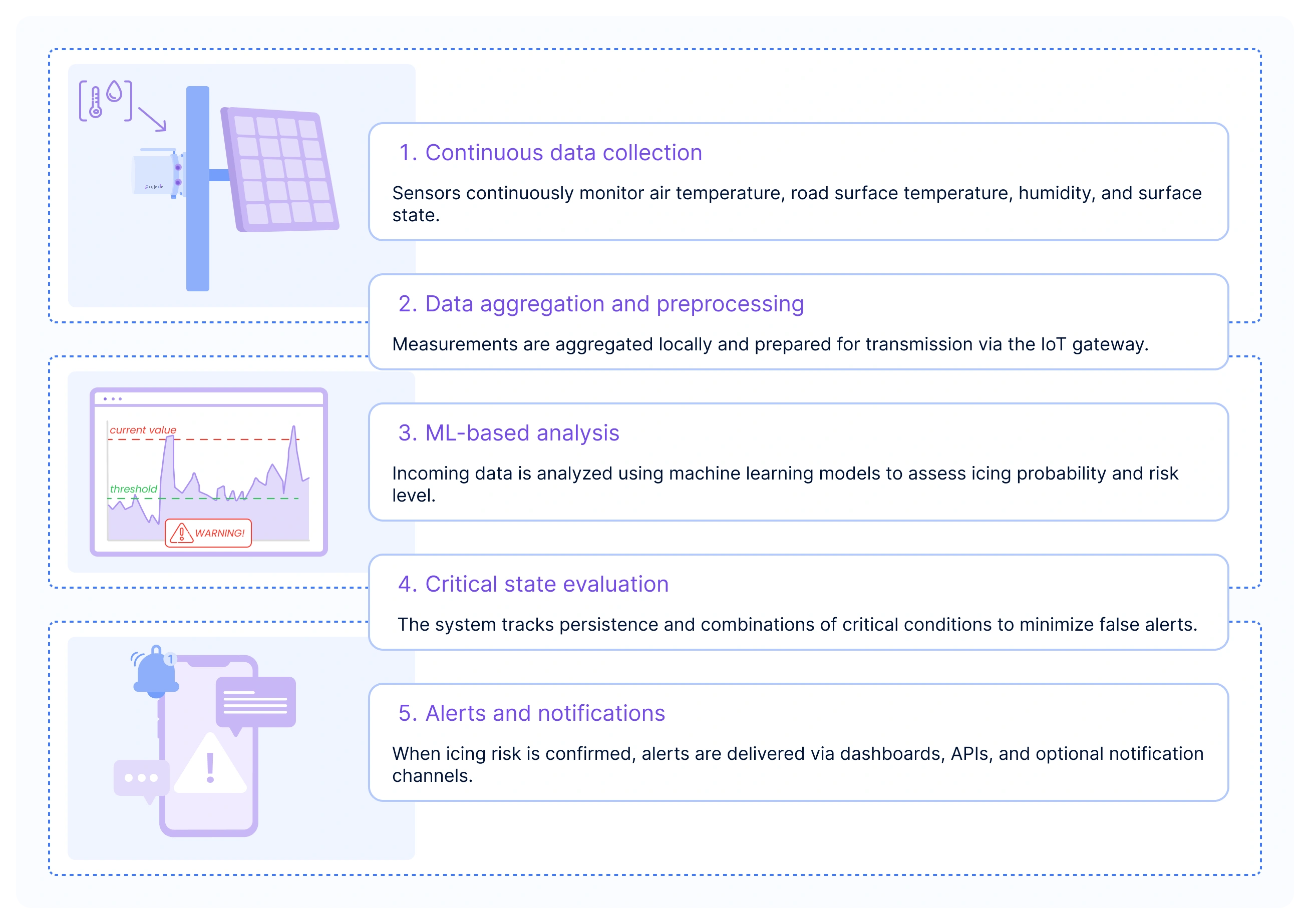
Jak działa Prylada Ice Detection Point w czasie rzeczywistym
.webp)
Przewagi konkurencyjne Punktu Wykrywania Lodu Prylada

Precyzyjne wykrywanie oblodzenia nawierzchni drogi dzięki fuzji danych z wielu czujników

Analityka oparta na uczeniu maszynowym zapewniająca wyższą dokładność i mniej fałszywych alarmów

Autonomiczne działanie z zasilaniem solarnym, umożliwiające instalację przy drogach w odległych lokalizacjach

Niezawodna łączność NB-IoT w obszarach o słabym zasięgu

Elastyczne wdrożenie: chmura publiczna, chmura prywatna lub infrastruktura lokalna (on-premise)

Elastyczne wdrożenie: chmura publiczna, chmura prywatna lub infrastruktura lokalna (on-premise)
Przypadki użycia i zastosowania
Czarny lód stanowi poważne zagrożenie dla bezpieczeństwa w wielu sektorach. Prylada Ice Detection Point pomaga organizacjom zapobiegać wypadkom i utrzymywać bezpieczne działanie w warunkach zimowych:
Pomaga chrońić harmonogramy transportu i bezpieczeństwo kierowców, identyfikując niebezpieczne warunki drogowe zanim spowodują opóźnienia lub wypadki.
Zezwala na bezpieczne funkcjonowanie autobusów i pociągów w strefach zamarzania i odmarzania, gdzie lód może powstawać w nieprzewidywalny sposób na trasach oraz peronach.
Pomaga w ograniczieniu liczby incydentów z udziałem kierowców oraz ryzyko odpowiedzialności prawnej dzięki powiadomieniom w czasie rzeczywistym o oblodzonych odcinkach dróg.
Podpowiada gdzie lepiej rozmieścić zasoby do odladzania gdzie są najbardziej potrzebne, w oparciu o rzeczywiste warunki drogowe, a nie prognozy.
Umożliwia służbom ratunkowym wybieranie bezpieczniejszych tras i utrzymanie czasów reakcji nawet podczas oblodzenia.
Wykrywanie powstawania lodu na pasach startowych, torach i drogach dojazdowych
Monitorowanie podwyższonych konstrukcji, które zamarzają jako pierwsze i pozostają oblodzone najdłużej, zanim warunki staną się niebezpieczne
Pomaga chrońić pieszych i rowerzystów, śledząc oblodzenie na chodnikach, ścieżkach rowerowych i przejściach o dużym natężeniu ruchu.
Dostarcza informacje celem optymalizacji trasy dostaw i przypisania kierowców w oparciu o warunki lodowe w czasie rzeczywistym w całym obszarze operacyjnym.
Zapobiegaj wypadkom poślizgnięć i upadków na parkingach, podjazdach i punktach dostępu dla klientów w obiektach komercyjnych.
Utrzymuj ruch, monitorując warunki oblodzenia wpływające na dostęp do sprzętu i działania terenowe
Pomaga dokładniej oceniać ryzyko, dostarczająć ubezpieczonym proaktywne ostrzeżenia bezpieczeństwa i zmniejszaąćj liczbę roszczeń związanych z zimowymi wypadkami.