
.svg)



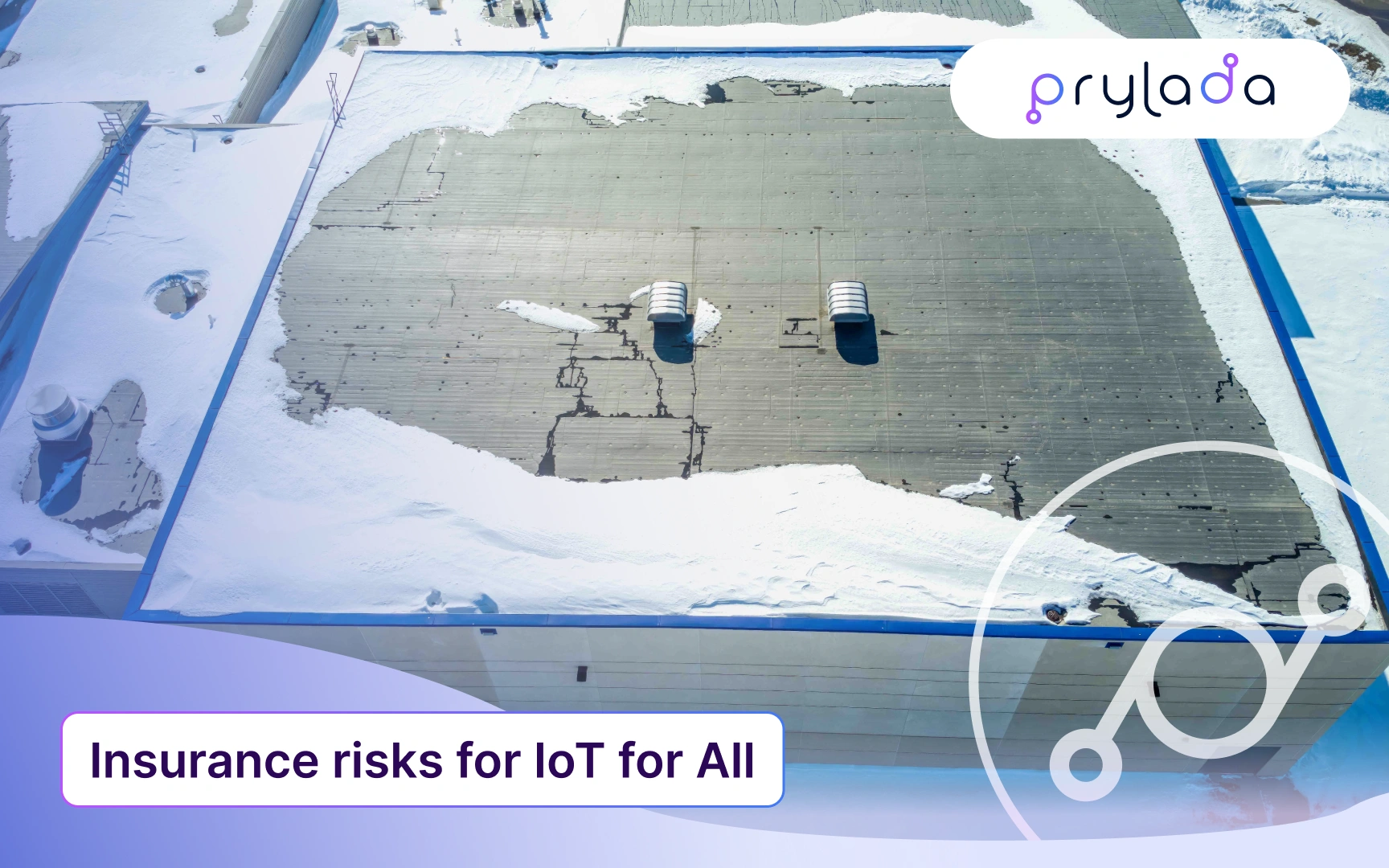
Roof collapses caused by snow and water loads continue to occur across commercial, industrial, and public infrastructure, despite the availability of modern sensing technologies.
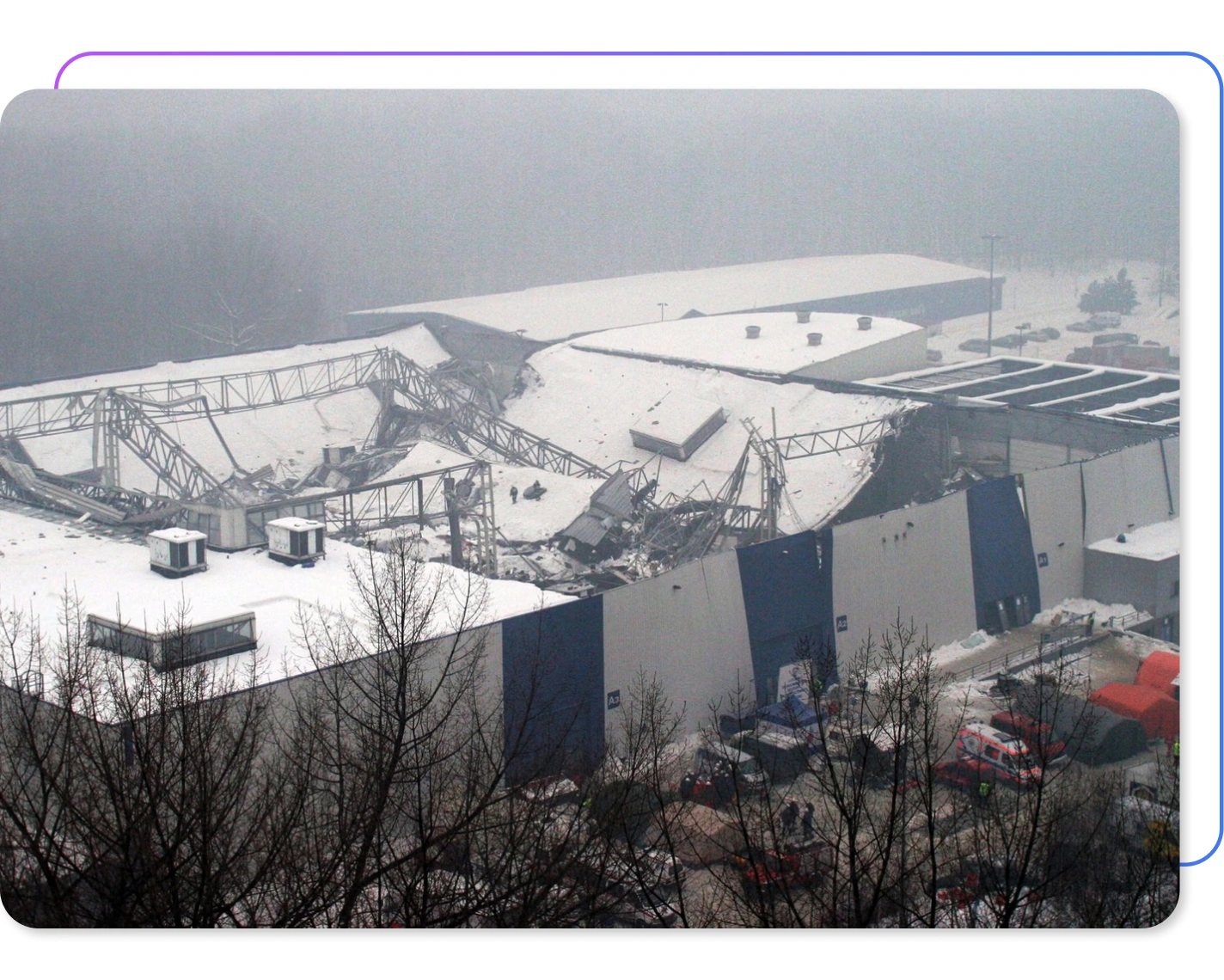
From large-scale disasters like the Katowice trade hall roof collapse to repeated failures in warehouses and logistics facilities, the pattern is consistent: risk accumulates gradually, but failure appears sudden.
For the IoT industry, this raises an important question: If sensors, telemetry, and weather data are already available, why are these incidents still happening?
Repeated large-scale failures in the commercial sector
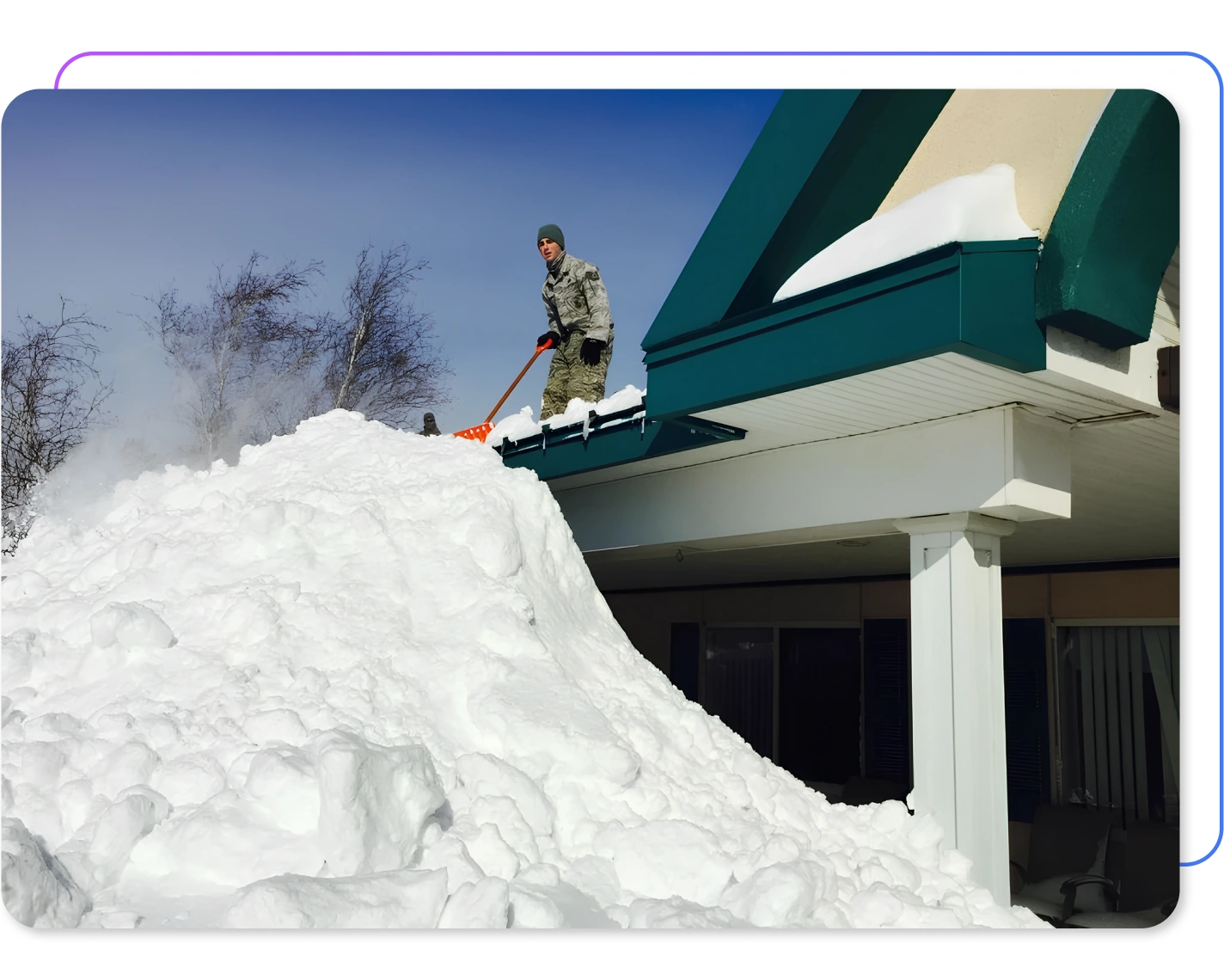
During the 2014 snowstorms in Buffalo and the surrounding areas:
- more than 30 roof collapses were reported across warehouses, commercial buildings, and agricultural structures
- several incidents involved large-span flat roofs, highly vulnerable to snow accumulation and uneven load distribution
- total damages were estimated in the millions of dollars
In many cases, the issue was not the absence of warning signs, but the absence of real-time structural monitoring and actionable thresholds.
As described by James Shaffer from Insurance Panda, these events often extend beyond structural damage:
“We insure the fleets underneath these roofs — not the roofs themselves.”
This highlights a critical risk multiplier: roof failure doesn’t just damage buildings, it destroys the assets and operations beneath them.
Another example from the US is where we see that even iconic structures are not immune:
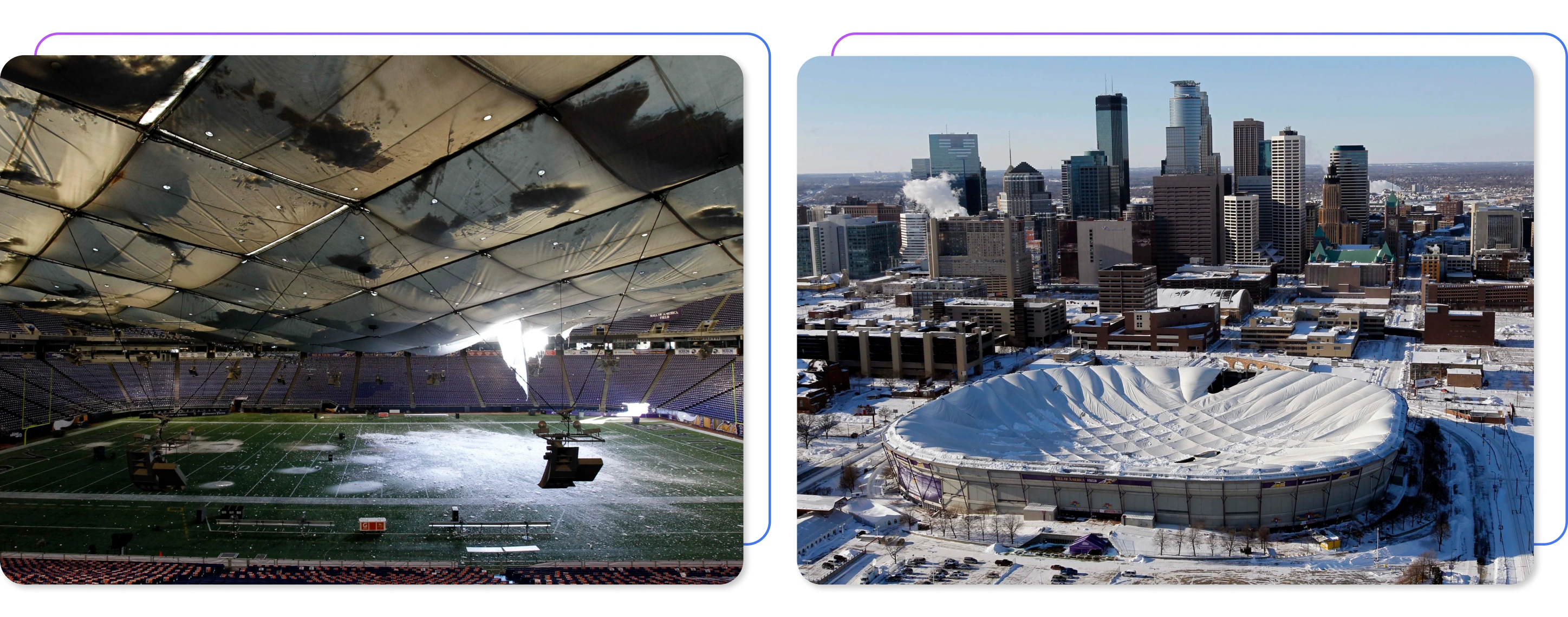
The Metrodome roof collapse demonstrated how quickly failure can occur under extreme snow load.
- The cause: Snow accumulation exceeding the design load capacity
- The consequence: Millions of dollars in damage and operational disruptions
- The conclusion: Weather forecasting alone was not enough to prevent the accident
This incident confirmed an important lesson: weather forecasting is not the same as real-time monitoring of structural loads.
The problem is not sensing — it’s interpretation
At a technical level, the ability to measure roof load already exists:
- strain gauges can detect structural deflection
- weather data provides external load inputs
- IoT devices can stream real-time measurements
In practice, however, these systems are often unable to prevent incidents. And the main problem here is not a lack of data, but a lack of meaningful interpretation. This leads us to the conclusion that, in many cases, monitoring systems generate alerts but do not make decisions.
Real-world constraints across the stack
Insights from industry professionals across insurance, construction, and facility operations highlight three distinct layers of the problem.
1. Insurance layer
According to the Managing Director at Insurance Panda, the data itself can create risk:
This creates a paradox: while IoT enables better visibility, it also increases accountability.
In some cases, building owners may choose not to install monitoring systems at all in order to reduce legal risks, preferring to have a defense rather than taking actual risks into account.
2. Structural layer
From an engineering perspective, Paul Rassam, Founder and Licensed Contractor at The Roofer Bros, highlights a fundamental limitation:
“Without structural reference, you’re collecting data, but not making decisions.”
Most existing buildings lack:
- accurate structural models
- defined load capacity thresholds
- calibration data for sensor interpretation
As a result, even high-quality sensor data may not answer the most critical question: Is the structure currently at risk?
3. Operational layer: detection happens too late
At the field level, monitoring is still largely manual.
As Tyler Henn, the owner of The Roof Finder (USA) explains, contractors rely on:
- attic and roofline inspections
- visual checks for water damage or ice dams
- manual snow removal
Similarly, Sebastian Rosas from E2E Cleaning Services notes:
“What looks like a routine cleaning job sometimes reveals something structural.”
These approaches are practical but inherently reactive. They depend on:
- physical access
- human detection
- delayed observation
By the time an issue is identified, the risk may already be critical.
Where current IoT approaches fall short
From an Internet of Things (IoT) architecture perspective, most roof monitoring solutions focus primarily on data collection but do not pay sufficient attention to the layers that enable practical application of that data.
Common shortcomings include:
- Lack of calibration
Sensor data is not correlated with the structure’s actual load-bearing capacity - Lack of integration with structural models
Measurements exist in isolation - Alerts without decision-making logic
Alerts are generated but not prioritized or contextualized - Isolated data streams
Weather, structural, and operational data are not integrated
The result is systems that are technically functional but operationally ineffective.
Where we fit in this space
At Prylada, we work on remote snow load monitoring as a way to improve visibility into roof load conditions using IoT sensors combined with environmental data.
Our current focus is on reliable real-time measurement and data collection in operational environments.
In parallel, we are developing machine learning models to better analyze load patterns and move toward early identification of potentially unsafe conditions, using historical and real-time data.
The objective is to support a gradual shift from isolated measurements toward more structured, data-driven understanding of roof load behavior over time.
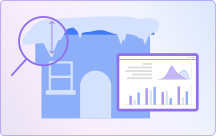
Remote flat roof snow load monitoring solution
Reframing the problem
Roof collapses are often viewed as a phenomenon linked to weather conditions. However, from a systemic perspective, the problem lies elsewhere:
It is not a problem of gathering information - it is a problem of decision-making under uncertainty.
Or, to be more precise, it is the information gap between data and action.

.webp)